


You just heard that satisfying notification on your phone at 3:00 AM, signaling someone bought a coffee mug from your store while you slept. According to e-commerce veterans, getting that alert actually represents only about 10% of the overall work in running a successful shop. What exactly happens next to ensure that specific mug travels from a supplier directly to your customer’s doorstep? Find the best dropshipping order management.
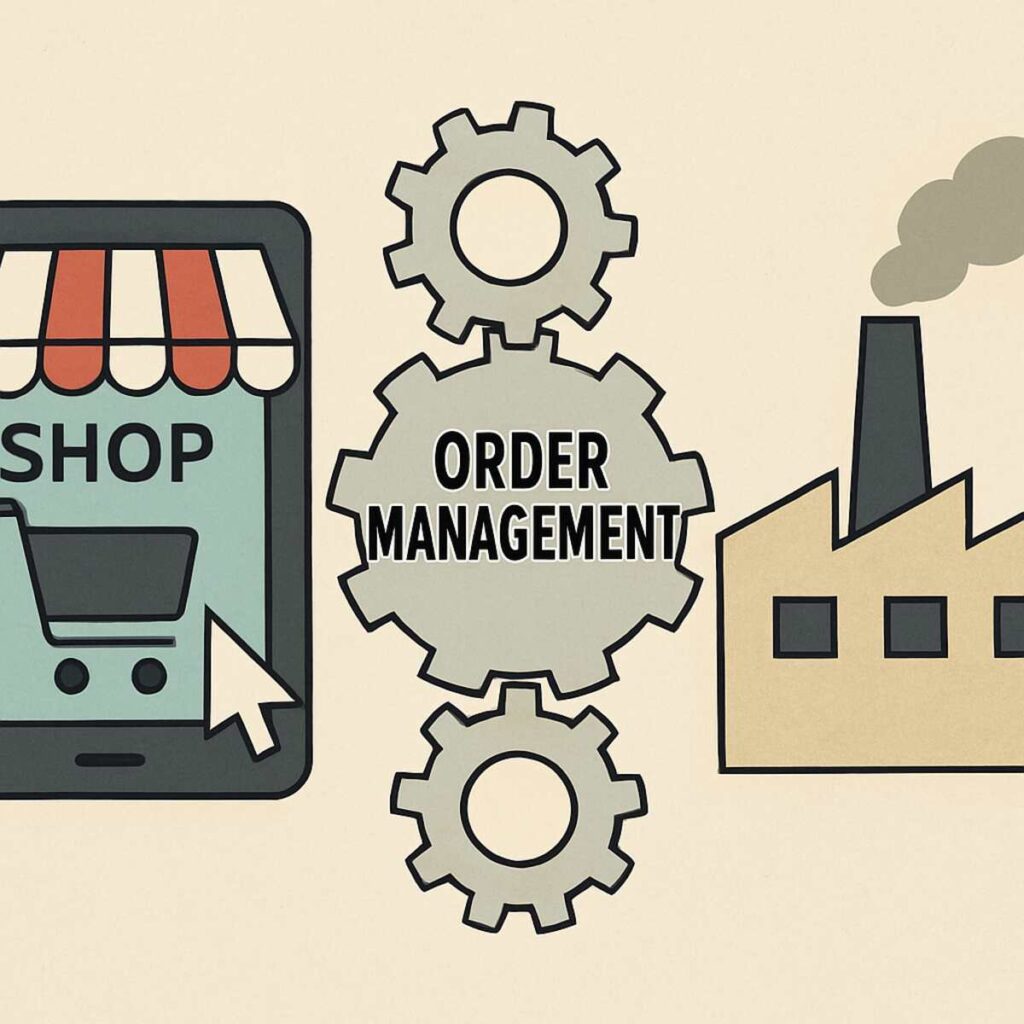
Behind that exciting sale lies the invisible engine of your business: dropshipping order management. This process acts as a digital bridge, silently translating your buyer’s payment into a confirmed packaging request at a distant warehouse. Because you never physically touch a cardboard box, purchase details must be passed accurately to prevent costly shipping errors.
Imagine typing out shipping addresses, names, and product codes for fifty different buyers before having your morning coffee. In practice, manually copying and pasting this information becomes a frustrating bottleneck that severely limits your business growth. Just one tiny typo could send a premium yoga mat to the wrong apartment building, instantly transforming a profitable transaction into a customer service nightmare.
Fortunately, modern software steps in to act like an incredibly efficient air traffic controller for your daily sales. By automating dropshipping fulfillment workflow tasks, these digital systems instantly route purchase details to the right factory without any midnight data entry on your part. Implementing these smart strategies ensures your store runs smoothly in the background, allowing you to scale up without losing sleep.
The Lifecycle of a Sale: From Click to Doorstep
You’ve set up your store, launched some ads, and finally, a customer buys a yoga mat. But what actually happens behind the scenes after they click “Buy Now”? At its core, successful dropshipping order management is about seamlessly transferring digital responsibility. The moment payment clears, the burden shifts from the customer wanting an item to you delivering it—even though you never personally touch the box.
Getting that mat to their doorstep requires navigating four distinct stages where a transaction can succeed or fail. Your entire supply chain relies on these critical hand-offs:
- Checkout: The customer pays you, creating a secure digital record of their request.
- Order Forwarding: Your store alerts the supplier. This “handshake” is the riskiest part of the journey; if the supplier misses the memo, the order stalls.
- Processing: The supplier physically locates, boxes, and labels the product.
- Shipping: A tracking number is generated and passed back to your customer for final delivery.
Visualizing this timeline makes it clear that your store acts as a middleman coordinating information. Because you rely on someone else to pack the goods, knowing exactly what they have in stock at any given second is crucial. Real-time inventory synchronization prevents the disaster of selling out-of-stock items.
The ‘Mirror’ Analogy: Why Real-Time Inventory Synchronization is Your Best Friend
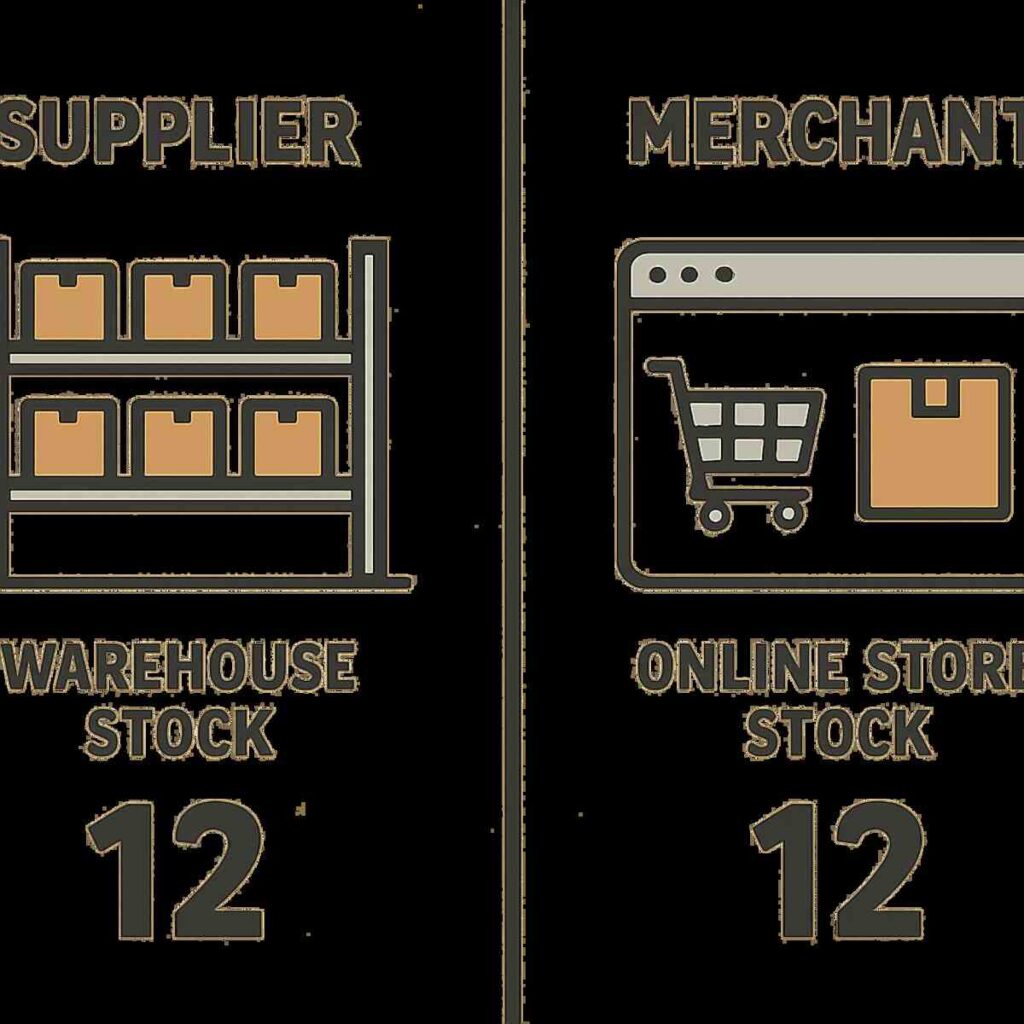
Imagine your online store as a perfectly polished mirror. If your supplier drops to 12 yoga mats, your storefront must instantly reflect that exact same number. This is inventory syncing—keeping your store’s numbers identical to your supplier’s supply. Without it, a customer could easily buy an item from you long after the supplier actually sold out.
Selling an item that no longer exists creates a “Ghost Product.” When this happens, you are forced to send apology emails and process refunds instead of celebrating a new sale. To prevent this nightmare, dropshippers rely on real-time inventory synchronization tools. These safety nets ensure that the second your supplier runs empty, your website automatically updates to say “Out of Stock,” completely protecting your reputation from angry customer reviews.
As your business grows, manually checking these numbers every hour becomes impossible. Handling this expansion requires multi-channel stock level management to guarantee inventory accuracy everywhere you sell.
The Traffic Controller Metaphor: How Automated Order Routing Works
What happens when a customer from New York orders a phone case, but you have active suppliers in both California and New Jersey? Without specialized software, you would have to manually email the closest warehouse to fulfill the request. Instead, modern management tools act like digital air traffic controllers, seamlessly coordinating with multiple third-party suppliers behind the scenes. This system is called automated order routing, and it instantly decides exactly where each new order should go based on conditions you choose.
Setting up this background logic is the secret to automating dropshipping fulfillment workflows. You can program your system to pick a supplier based on three specific rules:
- Distance: Send the order to the warehouse geographically closest to the buyer to ensure the fastest possible delivery time.
- Cost: Route the purchase to the supplier offering the cheapest shipping rates, actively protecting your profit margins.
- Stock: If your primary vendor runs empty, automatically redirect the order to your backup supplier to avoid canceling the sale.
Sometimes a shopper buys a phone case and a coffee mug in the exact same transaction, but no single vendor carries both items. Intelligent routing solves this by creating a “split shipment,” automatically dividing that single purchase into two separate vendor requests so the customer gets everything they paid for. While getting the product to the buyer seamlessly is incredibly satisfying, managing the reverse logistics of returns requires its own specialized operational logic.
The U-Turn Logic: Streamlining Returns and Refund Policies
Getting an item to a buyer feels great, but a return request can induce instant panic. Managing returns and refund policies in dropshipping requires specific “U-Turn Logic” because you don’t actually own a warehouse. When a buyer wants to send a yoga mat back, you must choose between Return-to-Supplier protocols (routing it to the original vendor) or having them mail it to your own home. Sending items back to overseas suppliers is often terribly expensive and painfully slow for the customer.
Since return shipping can easily exceed the cost of a simple phone case, the smartest financial move is often to just issue a refund and let the buyer keep the item. If you must get the product back, setting firm boundaries early is the secret to post-purchase customer experience optimization. A dropshipping-friendly return policy should clearly outline:
- Time limits: Set a strict 14 to 30-day return window after delivery.
- Condition rules: Require items to be unused and in their original packaging.
- Label costs: State exactly who is responsible for paying for the return shipping label.
Mastering this reverse logistics flow turns a frustrated buyer into a trusting, repeat shopper, setting a strong operational foundation for processing orders effortlessly.
Your 30-Day Action Plan for Seamless Order Management
You now understand the invisible engine running behind the “Buy Now” button. You have crossed the bridge from wondering how a supplier receives a customer’s shipping details to knowing exactly how to direct that digital hand-off. It is time to step out of the daily data-entry grind and shift from a busy side-hustler into a strategic business owner.
To make this transition, follow this 4-week implementation checklist to turn manual chaos into a highly efficient workflow:
- Week 1: Audit. Track every manual task you currently execute when a sale happens to identify your highest potential for automation.
- Week 2: Tool Selection. Choose a software platform that acts as the “middleman” connecting your storefront directly to your suppliers.
- Week 3: Syncing. Link your store’s “mirror” to the supplier’s inventory so your stock levels update instantly without personal intervention.
- Week 4: Scaling. Run test orders to ensure the software routes everything correctly to the right destinations.
Mastering dropshipping order management isn’t just about avoiding midnight panics over out-of-stock items. It is the necessary foundation for scaling operations through automation. By removing yourself from the repetitive fulfillment loop, you guarantee customers receive the right items faster, earning you the five-star reviews that naturally grow your brand.
Start with your Week 1 audit today and notice how many repetitive clicks you can eliminate right away. You are no longer just listing products online; you are directing a global supply chain from your laptop. Put these automated systems in place, let the software handle the heavy lifting, and gain the freedom to focus entirely on your business growth.